Architecture
Modular or monolithic: how current three-phase UPS models are built
A modular three-phase UPS holds several swappable power modules in one frame, so capacity and N+1 redundancy grow by adding modules; a monolithic UPS has one fixed power section and grows by paralleling whole units. Among current models, the APC Galaxy VL, Eaton 93PM, Vertiv Liebert APM2, Delta DPH and XPC M90U are modular, while Vertiv describes the Liebert EXL S1 and Toshiba the G9000 as monolithic.
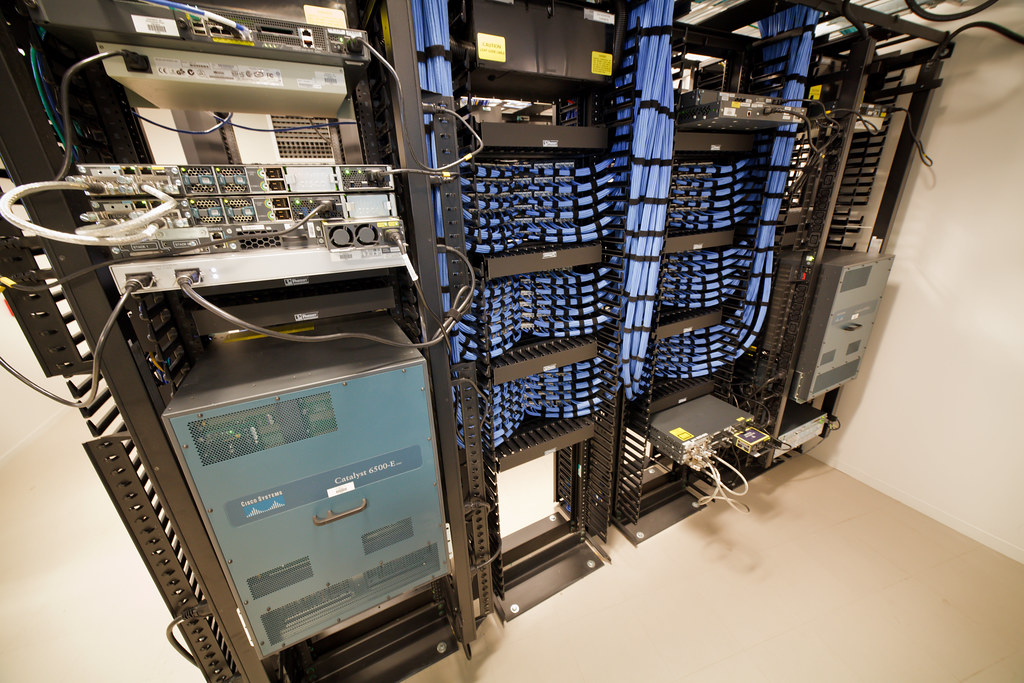
Module counts and parallel limits by model
| Model | Architecture | Redundancy and paralleling | Status | Source |
|---|---|---|---|---|
| APC Galaxy VL GVL200K500DS (200 kW scalable to 500 kW, 400/480 V) | Modular: 4 power modules installed, 6 free slots | Listed as redundant ("Redundant: Yes") | Current | Schneider Electric Canada, GVL200K500DS |
| APC Symmetra PX SY40K40F (40 kW N+1, 208 V) | Modular: 5 power-module slots, 4 filled, 1 free | Listed as redundant ("Redundant: Yes", sold as 40 kW N+1) | Partly discontinued: December 31, 2025 (150 kW scalable to 250 kW model) | Schneider Electric Canada, SY40K40F |
| Eaton 93PM 93PM 208V (North America) | Modular: up to 10 internal power modules | External parallel up to 8 UPSs | Current | Eaton, 93PM 208V UPS page |
| Eaton 93PS 93PS, 8 to 40 kW | 8 to 10 kW frame monolithic; 20 kW frame 1 module; 40 kW frame 1 or 2 modules | Not stated | Current | Eaton, 91PS and 93PS UPS page |
| Eaton Power Xpert 9395P Power Xpert 9395P, 200 to 1,200 kVA | Up to 2 UPMs (300 kW), 3 (600 kW) or 4 (900/1,200 kW) | N+1 capable; parallel up to 4 UPSs with distributed bypass, 8 with a system bypass module | Current | Eaton, Power Xpert 9395P page |
| Eaton 9395XR 9395XR, 1,500 kW | 12 universal power modules of 125 kW | Parallel up to 4 UPSs (6,000 kW) | Current | Eaton, 9395XR UPS page |
| Vertiv Liebert APM2 Liebert APM2 UL, 208 V (data sheet SL-71300) | Modular: hot-swappable power, bypass, HMI, communication and battery modules | Modular redundant; parallel up to 4 units | Current | Vertiv, Liebert APM2 data sheet SL-71300; Vertiv Canada, Liebert APM2 UL UPS 208V |
| Delta Modulon DPH DPH-300K, DPH-500K, DPH-600K (400 V) | 50 kW power modules: up to 6, 9 or 12 | Module and system redundancy, up to 8 units | Current | Delta, DPH 50-600 kW specifications |
| XPC M90U-80 M90U-80, 15 to 80 kW at 208/120 V | Up to four hot-swappable 15 kW or 20 kW modules | Not stated | Current | XPC, M90U-80 |
| ABB DPA 250 S4 DPA 250 S4 | Modular, decentralized parallel architecture: each module has all functional units | Not stated | Current | ABB, DPA 250 S4 |
| Socomec MODULYS GP MODULYS GP, 25 to 600 kVA (400 V) | Hot-swappable power modules, no centralized parallel control | Not stated | Current | Socomec, MODULYS GP |
| Vertiv Trinergy (newer range) Vertiv Trinergy, the newer range that follows the Trinergy Cube (brochure SL-71331) | Multi-module, 1.5 MW up to 20 MW | Not stated | Partly discontinued | Vertiv, Trinergy UPS brochure SL-71331 |
| Vertiv Liebert EXL S1 Liebert EXL S1 (brochure for 625 to 800 kVA) | Monolithic, single-module or multi-module | Parallel up to 8 units, distributed or centralized | Current | Vertiv, Liebert EXL S1 625-800 kVA brochure; Vertiv, Liebert EXL S1 page |
| Toshiba G9000 G9000, 100 to 1,050 kVA | Monolithic, 480 V 3-wire + ground | Parallel up to 4 units (100 to 225 kVA) or 8 units (300 to 750 kVA) | Current | Toshiba International, G9000 series |
| Eaton 9355 9355, 10 to 30 kVA | Tower with internal batteries and power distribution module | Parallel up to four UPSs (HotSync) | Current | Eaton, 9355 UPS page |
| Mitsubishi Electric 9900B 9900B, 300, 500 and 750 kVA at 480 V | Not stated | Parallel up to 8 units with a CLC; distributed bypass for multi-module | Current | Mitsubishi Electric, 9900B UPS |
| Mitsubishi Electric 9900AEGIS 9900AEGIS, 80 to 225 kVA at 480 V | Not stated | Parallel redundant or capacity, up to 4 modules | Current | Mitsubishi Electric, 9900AEGIS UPS |
| ABB TLE Series ABB TLE Series 40-150 kW and 160-1000 kW UL | 40-150 kW model scales vertically from 40 to 150 kW | Redundant Parallel Architecture: up to 6 units (to 900 kW for the 40-150 kW model) | Current | ABB US, TLE Series 40-150 kW |
| APC Galaxy VS GVSUPS20KFS (20 kW, 208 V) and GVSUPS100KGS (100 kW, 480 V) | Live Swap power modules | Single units listed as non-redundant ("Redundant: No"); parallel kit sold separately (GVSOPT006) | Current | Schneider Electric Canada, GVSUPS20KFS |
Sources, checked October 3, 2026: values as each manufacturer publishes them for the model shown; “Not stated” means the page we read does not give the value.
What the slot count tells you
The slot count sets the ceiling. Schneider lists the Galaxy VL GVL200K500DS with 4 power modules installed and 6 free slots, which is how a 200 kW frame grows to 500 kW. Eaton's 93PM 208 V takes up to 10 internal power modules, the 9395XR is built from 12 universal power modules of 125 kW, and Delta's DPH frames hold up to 6, 9 or 12 modules of 50 kW.
N+1 inside a frame needs a free slot for the spare. Schneider sells the Symmetra PX SY40K40F as 40 kW N+1 with 4 of its 5 slots filled. On the XPC M90U-80, four 20 kW modules make 80 kW and fill every slot, so an N+1 system in that cabinet carries 60 kW at most.
Not every modular range is modular at every size
Eaton lists the 93PS 8 to 10 kW frame as monolithic, the 20 kW frame with one power module and the 40 kW frame with one or two. The same range name can cover both designs, so check the frame you are buying, not only the range.
How monolithic units add capacity and redundancy
Monolithic units reach redundancy by paralleling, and each manufacturer publishes its own limit: up to 8 units for the Vertiv Liebert EXL S1, up to 8 for the Mitsubishi 9900B with a CLC, 4 or 8 for the Toshiba G9000 depending on the rating, 4 for the Eaton 9355 and 6 for the ABB TLE Series. ABB's DPA 250 S4 sits between the two designs: it is modular, but each module carries all of its own functional units, which ABB calls decentralized parallel architecture.
Questions to settle before you choose
- Module size against your load steps: 15 or 20 kW on the XPC M90U-80, 50 kW on the Delta DPH, 125 kW on the Eaton 9395XR.
- Free slots at the end-state load, with one spare for N+1.
- The parallel limit, if the end-state is larger than one frame.
- Status: the Symmetra PX is partly discontinued, and the table shows the status of each family.
Both architectures appear among the three-phase UPS families by platform online, and the page on high-capacity three-phase UPS for mission-critical sites shows how either is installed and serviced.
Frequently asked questions
Is the Eaton 93PS modular?
Partly. Eaton lists the 93PS 8 to 10 kW frame as monolithic, the 20 kW frame with one power module and the 40 kW frame with one or two.
Is the Vertiv Liebert EXL S1 modular?
No. Vertiv describes the Liebert EXL S1 as a monolithic, transformer-free UPS; capacity and redundancy come from paralleling up to 8 units.
How many power modules does the APC Galaxy VL hold?
Schneider lists the GVL200K500DS, 200 kW scalable to 500 kW, with 4 power modules installed and 6 free slots, and lists it as redundant.
Which modular three-phase UPS run at 208 V?
Among current models: the Eaton 93PM 208 V with up to 10 power modules, the Vertiv Liebert APM2 208 V, the XPC M90U-80 at 208/120 V and the APC Symmetra PX 208 V frames.
Related guides and systems
Request a system quote
Tell us the application and we reply within 4 business hours with the sizing, the right system, the installation and a written quote. Three-phase installs usually need a licensed electrician, so let us know if you have one.
Brand names are trademarks of their owners and are used only to identify the equipment we service. We are not the manufacturer and are not affiliated with it.