White paper
Selecting flywheel, battery and supercapacitor ride-through for three-phase UPS systems
Ride-through technology should follow duration, power, cycling, generator behaviour, temperature, maintenance and critical-load reserve.
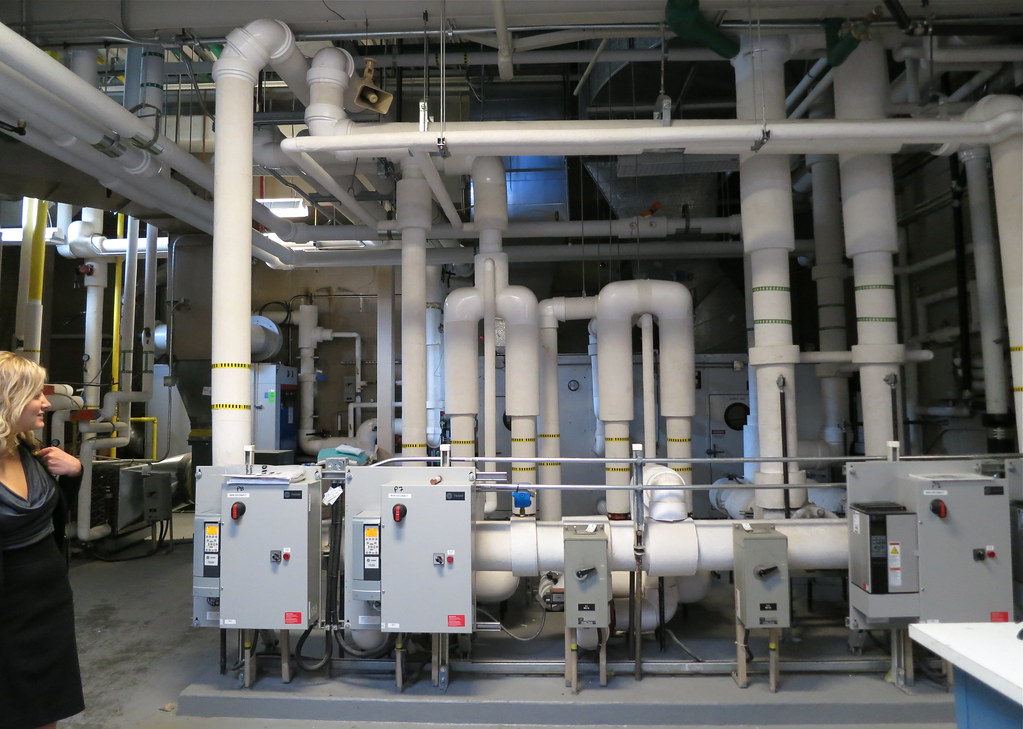
Ride-through technology should follow duration, power, cycling, generator behaviour, temperature, maintenance and critical-load reserve. [1] [2] [3] [4]
Operating decision
The decision begins with the function to preserve, support time, source states, consequence of interruption and accepted exposure during maintenance. A technology name or nominal rating does not replace those inputs. Selection remains conditional while load, voltage, environment, bypass or operating authority is unknown.
Active Power describes flywheel UPS systems as kinetic-energy bridges that can coordinate with generator starting. [2]
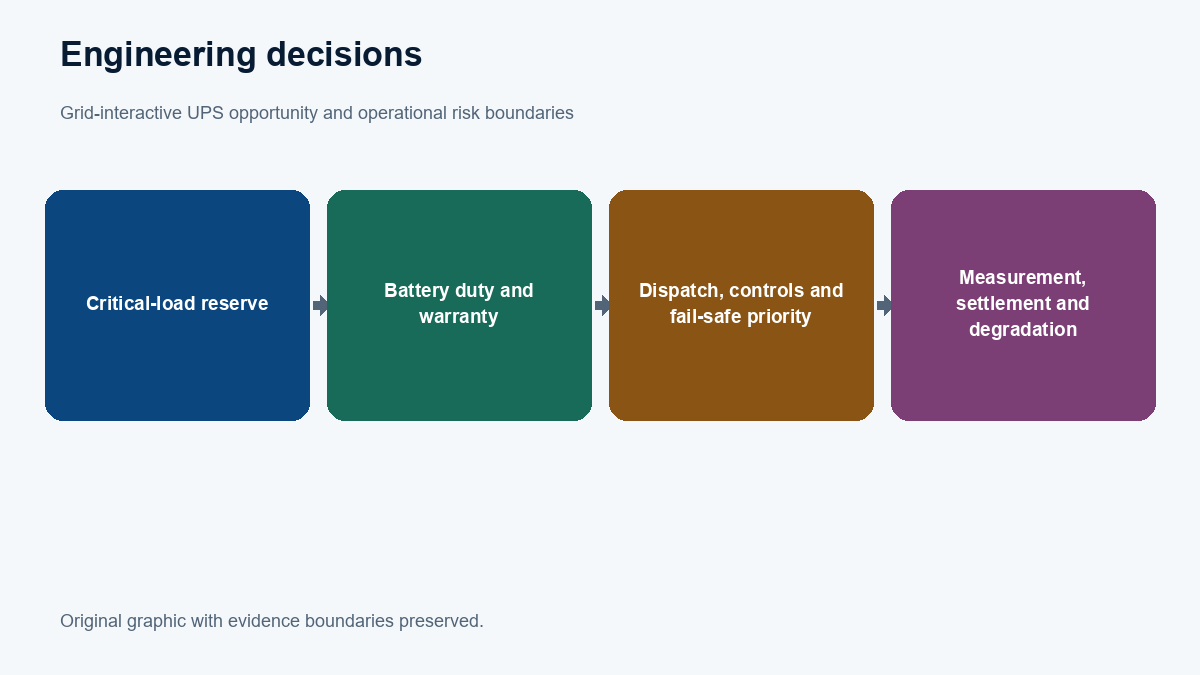
Figure 1: Engineering decisions.
Evidence basis
Eaton and Riello each describe supercapacitors as high-power, short-duration storage whose application depends on the required bridge time and cycling duty. [3] [4]
Battery systems offer longer autonomy ranges, but chemistry, discharge power, temperature, monitoring, charger compatibility and emergency response remain configuration-specific. [1]
Manufacturer sources define published capabilities for specific families and configurations. They are used for their own facts, not as generic values. The internal reference connects those facts to site measurement, safety, maintainability and acceptance testing. Any claim that depends on model, code or region is rechecked at project time.
Figure 2: Evidence roles.
Design inputs
The survey records average and peak load, watts and VA, inrush, voltage, phases, conductors, grounding, runtime, generator, bypass, protection, temperature, ventilation, delivery route, communications and work window. Each value receives a status: observed, measured, documented, stated, calculated or unresolved.
An unresolved value is not automatically converted into conservative margin. Some unknowns can be carried as assumptions with an owner and expiry. Others block the project because they determine safety, capacity, source compatibility, storage, certification or maintainability.
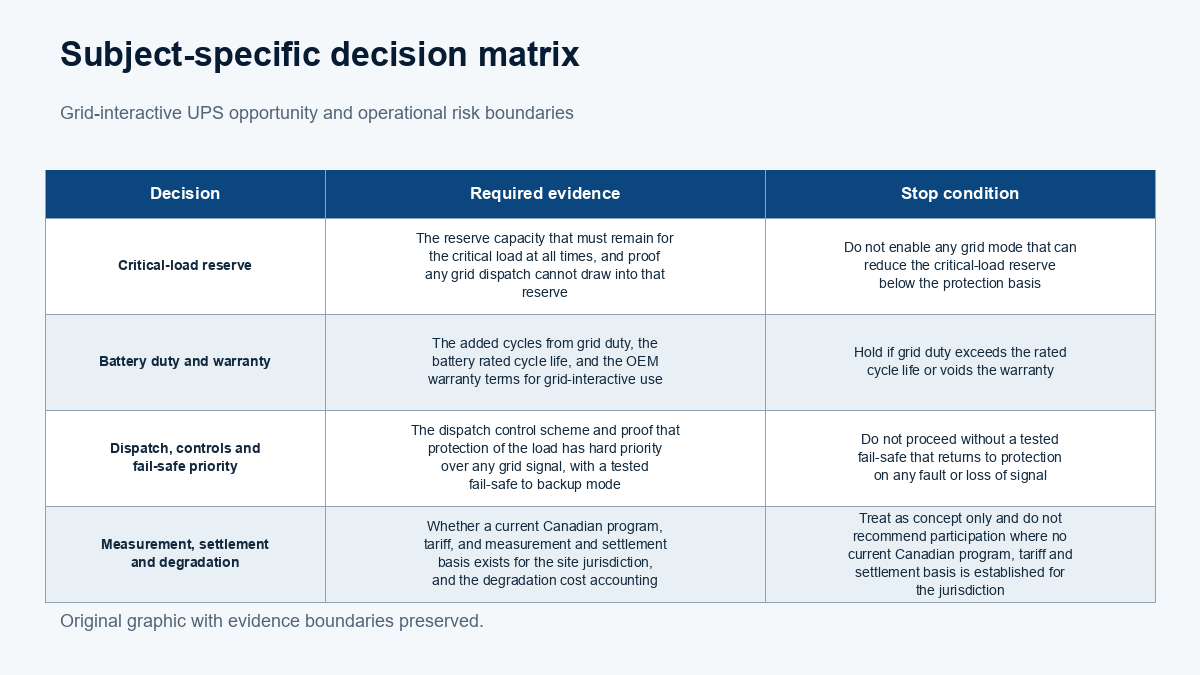
Figure 3: Subject-specific decision matrix.
Option comparison
| Option | Benefit to verify | Main exposure | Required evidence |
|---|---|---|---|
| Baseline configuration | Familiar process | Inherited assumptions | Current site and OEM evidence |
| Targeted change | Addresses one constraint | New service boundary | Test of the affected state |
| Coordinated replacement | Standardizes assets | Larger cutover scope | Complete register and rollback plan |
The comparison uses one horizon for purchase, installation, bypass, cooling, startup, maintenance, consumables, spares, support and retirement. A saving is published only when tariff, load profile, cycling, replacements and uncertainty are stated.
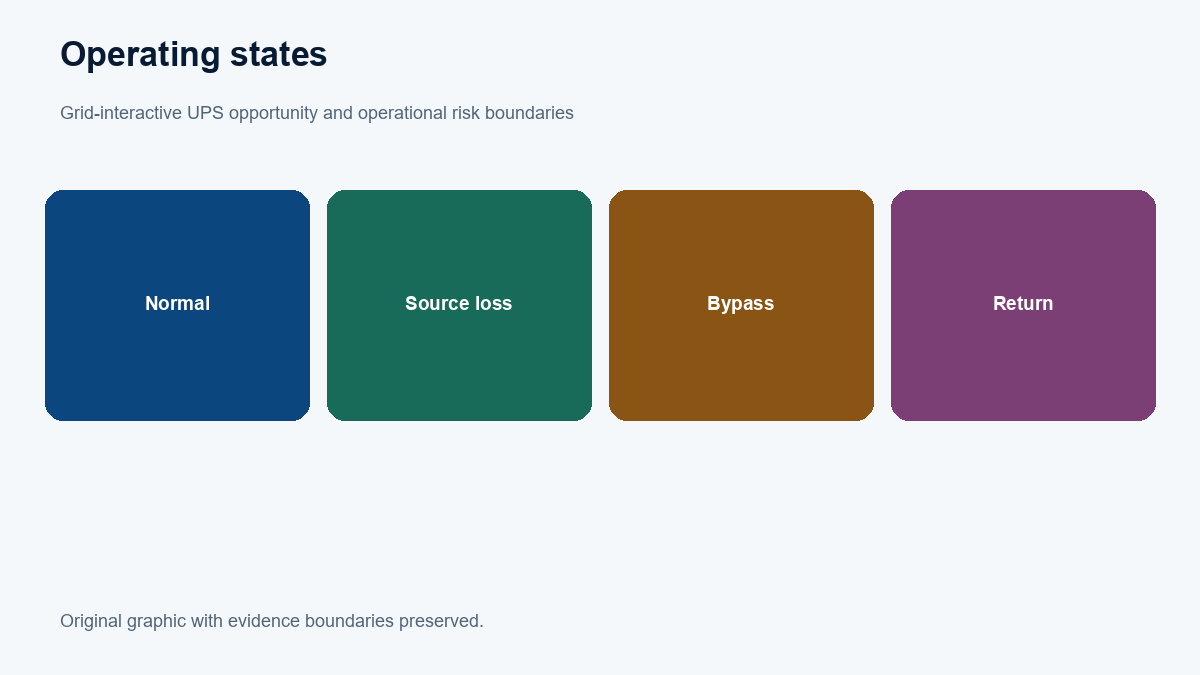
Figure 4: Operating states.
Operating and maintenance states
The state register covers normal operation, source loss, stored-energy support, alternate source, static bypass, maintenance bypass, isolation and return. It records load path, power quality, reserve, energized sources, permitted duration, alarms, stop conditions and rollback.
No live-work sequence is published. Switching and isolation belong in a site-specific method performed by qualified personnel using the exact manual, safety program, instruments, communications, hold points and approved rollback.
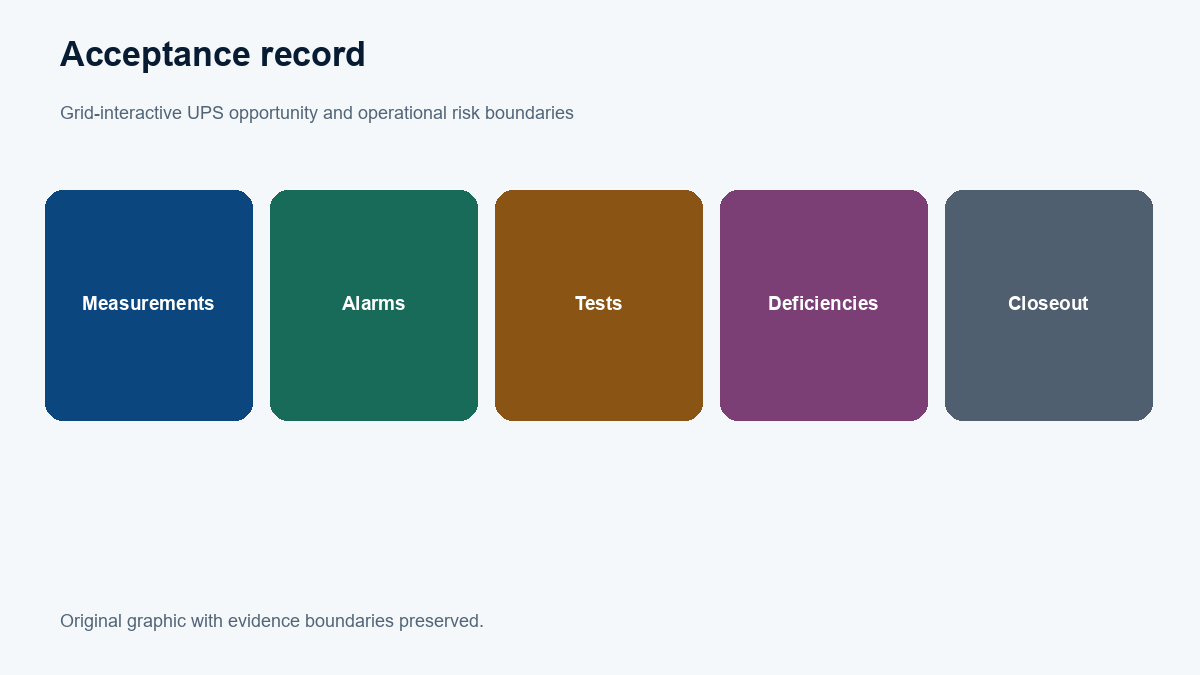
Figure 5: Acceptance record.
Procurement and commissioning
The purchase record binds model, voltage, rating, storage, bypass, accessories, network interface, certification, warranty and startup. A substitute is checked with its own source. Commissioning measures values, alarms, transitions and final state against criteria established before the test.
For intervention planning, review data-centre UPS service. For equipment context, review UPS systems.
Measurement limits
A technical sheet, case study and self-test answer different questions. The sheet states a published capability. The case reports an attributed result. The self-test confirms a limited internal function. None replaces a measured runtime test, witnessed transfer or analysis of untested states.
Approval record
Approval retains the design basis, sources, calculations, assumptions, as-built drawings, settings, tests, deficiencies, corrections, owners and next review date. The project is reopened after load growth or a change in source, room, firmware, battery, support or operating objective.
Subject-specific decision register
Four decisions govern this publication: required bridge duration, peak discharge power, cycle frequency and recovery and generator acceptance and reserve. They form a reviewable register instead of a generic checklist. Each row has an input, source, owner, acceptance condition and consequence when evidence is missing.
| Decision | Required evidence | Stop condition |
|---|---|---|
| Required bridge duration | The ride-through the load needs in seconds, from the generator start-and-accept time plus margin, from the generator data and transfer scheme | Hold selection until the required bridge seconds are established from the generator start time, not assumed |
| Peak discharge power | The peak real power in kW the store must deliver at the worst-case load and power factor, with the store rated discharge power at the required duration | Hold if the store rated power at the required duration is below the peak load |
| Cycle frequency and recovery | Expected discharge cycles per year, the recharge or respin time between events, and the technology rated cycle life at that duty (flywheel, VRLA, supercapacitor) | Hold if recovery time exceeds the interval between expected events, or cycle life is unrated for the duty |
| Generator acceptance and reserve | Confirmation the generator accepts the UPS input (step load, harmonics) and the reserve margin held above the critical load | Do not finalize without generator acceptance evidence and a stated reserve margin |
The site survey records load, source, room, environment, bypass, delivery route and operating constraints [5]. Calculations and assumptions retain units, load state and source [6]. This connection prevents a catalogue value or a case outcome from becoming the default value for a new installation.
The state register separates normal operation, source loss, stored-energy support, static bypass, maintenance bypass, isolation and return [7]. It states what supplies the load, remaining protection, energized sources, permitted duration, alarms and the point where work must stop.
Monitoring identifies card, firmware, protocols, network segment, accounts, logs and alarm owner [8]. Read-only remains the starting point. A remote command or automated shutdown requires an approved need, dependency map and tested rollback.
Commissioning establishes criteria before testing and retains measurements, events, deficiencies, corrections and final state [9]. The service agreement states response, exclusions, spares, maintenance window, report and next lifecycle decision [10].
Sources
- Internal engineering library, UPS Energy Storage Technology Selection.
- Active Power, Operation and Performance of a Flywheel-Based UPS System. https://www.activepower.com/wp-content/uploads/2023/11/operation-and-performance-of-a-flywheel-based-uninterruptible-power-supply-ups-system_compressed.pdf
- Eaton, Eaton Type-10 UPS for Healthcare Facilities. https://www.eaton.com/content/dam/eaton/products/electronic-components/resources/technical/eaton-supercapacitor-type-10-ups-application-note.pdf
- Riello UPS, SuperCaps for Uninterruptible Power Supplies. https://www.riello-ups.com/uploads/file/388/3388/Riello_UPS_WhitePaper_SuperCaps_01-20_EN.pdf
- Internal engineering library, UPS Site Survey and Requirements Capture.
- Internal engineering library, UPS Engineering Calculations and Independent Design Verification.
- Internal engineering library, UPS Maintenance MOP Safety Boundaries and Go-No-Go Criteria.
- Internal engineering library, UPS Monitoring Cybersecurity and Network Integration.
- Internal engineering library, UPS Commissioning and Acceptance Testing.
- Internal engineering library, UPS Service SLA Design and Coverage Scoping.
Request a system quote
Tell us the application and we reply within 4 business hours with the sizing, the right system, the installation and a written quote. Three-phase installs usually need a licensed electrician, so let us know if you have one.
Brand names are trademarks of their owners and are used only to identify the equipment we service. We are not the manufacturer and are not affiliated with it.