Commissioning
Three-phase UPS commissioning: what each manufacturer includes
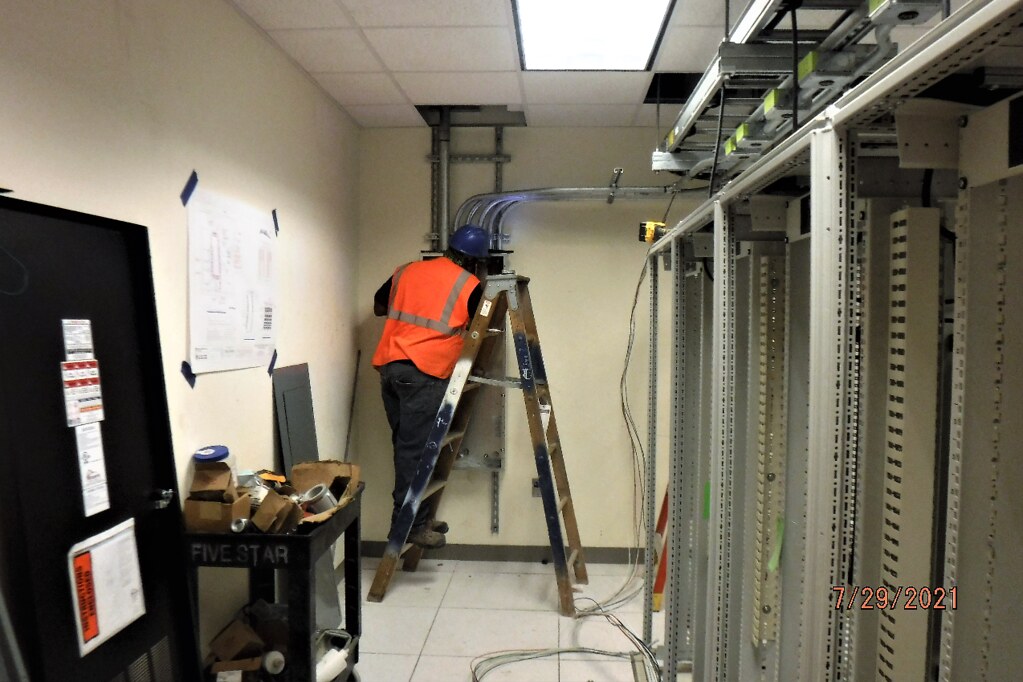
Commissioning a three-phase UPS is the on-site start-up and test sequence that proves the installed system before it carries the load. For many current models the manufacturer ties start-up to its own service: Schneider includes a 5x8 start-up in the part numbers of the Galaxy VS, VL, VX and Easy UPS models we list, and Eaton includes start-up on the 93PM and 9395 family and defines it as work by an Eaton engineer or agent.
Start-up and built-in test features by model
| Model | Start-up and on-site testing | Status | Source |
|---|---|---|---|
| APC Galaxy VS GVSUPS20KFS (20 kW, 208 V) and GVSUPS100KGS (100 kW, 480 V) | Start-up 5x8 included in the part (GVSUPS20KFS, GVSUPS100KGS) | Current | Schneider Electric Canada, GVSUPS20KFS; Schneider Electric Canada, GVSUPS100KGS |
| APC Galaxy VX GVX500K750HS (500 kVA scalable to 750 kVA, 400 V) | Start-up 5x8 included in the part | Current | Schneider Electric Canada, GVX500K750HS |
| APC Galaxy VL GVL200K500DS (200 kW scalable to 500 kW, 400/480 V) | Start-up 5x8 included in the part | Current | Schneider Electric Canada, GVL200K500DS |
| APC Easy UPS 3S E3SUPS20KFBS (20 kVA, 208 V, internal batteries) | Start-up 5x8 included in the part | Current | Schneider Electric Canada, E3SUPS20KFBS |
| APC Easy UPS 3M E3MUPS120KHS (120 kVA, 400 V) | Start-up 5x8 included in the part | Current | Schneider Electric, E3MUPS120KHS |
| Eaton 93PM 93PM 208V (North America) | Startup included; done by an Eaton Customer Service Engineer or agent; warranty runs from startup | Current | Eaton, 9315, 93PM and 9395 startup, warranty and support overview |
| Eaton Power Xpert 9395P Power Xpert 9395P, 200 to 1,200 kVA | Startup included (9395 family); battery start standard | Current | Eaton, 9315, 93PM and 9395 startup, warranty and support overview; Eaton, Power Xpert 9395P page |
| Eaton 9395XC 9395XC, 1,125 to 2,250 kW, 480 V 3-wire | Battery startup and soft start standard; startup included (9395 family) | Current | Eaton, 9395XC UPS page; Eaton, 9315, 93PM and 9395 startup, warranty and support overview |
| Eaton 9395XR 9395XR, 1,500 kW | Cold start; rectifier soft-start ramp-up for generators | Current | Eaton, 9395XR UPS page |
| Vertiv Liebert EXL S1 Liebert EXL S1 (brochure for 625 to 800 kVA) | Power walk-in 1 to 300 s; safe capacity mode tests UPS load and battery discharge without an external load bank | Current | Vertiv, Liebert EXL S1 625-800 kVA brochure; Vertiv, Liebert EXL S1 page |
| Vertiv Trinergy (newer range) Vertiv Trinergy, the newer range that follows the Trinergy Cube (brochure SL-71331) | Walk-in soft start 15 s (1 to 90 s selectable) | Partly discontinued | Vertiv, Trinergy UPS brochure SL-71331 |
| Toshiba G9000 G9000, 100 to 1,050 kVA | Generator friendly; accepts 0 to 100% load steps | Current | Toshiba International, G9000 series |
| Mitsubishi Electric 9900B 9900B, 300, 500 and 750 kVA at 480 V | 1.1:1 generator compatibility | Current | Mitsubishi Electric, 9900B UPS |
| Mitsubishi Electric 9900AEGIS 9900AEGIS, 80 to 225 kVA at 480 V | 1.1:1 generator sizing | Current | Mitsubishi Electric, 9900AEGIS UPS |
| Delta Modulon DPH DPH-300K, DPH-500K, DPH-600K (400 V) | Battery start | Current | Delta, DPH 50-600 kW specifications |
Sources, checked October 3, 2026: values as each manufacturer publishes them for the model shown; “Not stated” means the page we read does not give the value.
Start-up and the warranty clock
Eaton's terms show why start-up timing matters. Outside the United States, the parts warranty on the 93PM and the 9395 family runs 12 months from start-up or 18 months from shipment, whichever comes first, and Eaton defines start-up as work by an Eaton Customer Service Engineer or agent. A unit that waits on site for months before start-up uses up warranty. Eaton also publishes a start-up checklist to complete before the visit.
Schneider's 5x8
The "Start-up 5x8" in Schneider part numbers is a start-up visit scheduled in weekday business hours. Schneider sells an upgrade from 5x8 to 7x24 scheduling for sites that need a night or weekend start-up.
Features that make the tests easier
Some built-in features change what a commissioning day needs. Vertiv's safe capacity mode on the Liebert EXL S1 tests UPS load and battery discharge without an external load bank; on models without that mode, the commissioning plan should include load bank testing of a UPS and its batteries before the unit carries the critical load. Walk-in timers set how fast the rectifier picks up load from a generator: 1 to 300 seconds on the EXL S1 and 15 seconds (1 to 90 selectable) on the Trinergy. Eaton lists battery start as standard on the 9395P and 9395XC and cold start on the 9395XR, and Delta lists battery start on the DPH.
What a start-up record should hold
Keep the settings the tests depend on with the start-up report: the walk-in time, the bypass voltage window (plus or minus 10% on the Galaxy VS; 10 to 20% upper and 10 to 40% lower on the Liebert APM2), the parallel configuration and the firmware revision. They are the first things checked when a transfer or a generator test does not behave as expected.
Installation and start-up can be booked through UPS installation and consulting service, and the start-up record becomes the baseline for preventive maintenance visits.
Frequently asked questions
Is start-up included with an APC Galaxy VS?
The part numbers we list, such as GVSUPS20KFS and GVSUPS100KGS, include "Start-up 5x8" in their Schneider descriptions.
Who has to start up an Eaton 93PM?
Eaton includes start-up and defines it as work by an Eaton Customer Service Engineer or agent; the warranty is counted from start-up.
Can the Liebert EXL S1 be load-tested without a load bank?
Vertiv's safe capacity mode tests UPS load and battery discharge without an external load bank.
How long is the Eaton warranty on a 9395 outside the US?
Eaton lists parts coverage of 12 months from start-up or 18 months from shipment, whichever comes first.
Related guides and systems
Request a system quote
Tell us the application and we reply within 4 business hours with the sizing, the right system, the installation and a written quote. Three-phase installs usually need a licensed electrician, so let us know if you have one.
Brand names are trademarks of their owners and are used only to identify the equipment we service. We are not the manufacturer and are not affiliated with it.